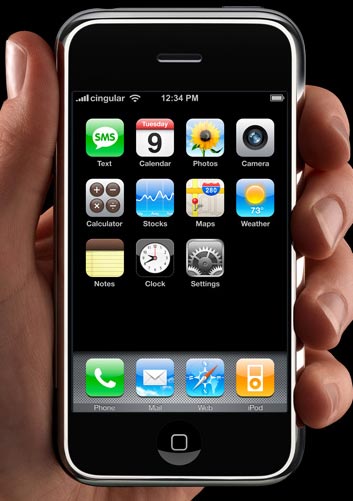
I’m a bit late to the iPhone party. Actually, scratch that.
I waited until I could purchase the device at a reasonable price – and that is not something I am ashamed to admit. When an upgrade offer of $99 for the phone with a two-year contract came to my attention, how could I say no?
As an iPhone user for a little over a month now, I have difficulty remembering how I functioned without it. Today, I’m going to share with you a few apps that have changed my life.
Facebook for iPhone and Echofon
I’m going to lump these two applications together. Do they really need an introduction? Well, yes. Not everyone sits on TechCrunch all day. Elitist bloggers please take note!
Facebook for iPhone allows access to your Facebook account in ways you never imagined. The application has a grid-like menu that provides easy access to all of Facebook’s most important features and makes sharing photos incredibly easy. Push notifications – which should have been a no-brainer from the start – only recently arrived, but who cares? It’s just an added bonus. I would have used it no matter what. Afterall, this is Facebook – we use it, we love it and we cannot live with out it!
Echofon is routinely touted as the best free Twitter app on the market. It loads fast, offers multiple features and allows you to view profiles with ease. Although push notification features are only available by purchasing Echofon Pro, I’m not terribly disappointed.
Pandora
Distractions – i.e. real life – have disrupted my intake of music over the years. I no longer attend local shows as often as I once did and I’ve become less willing to take risks with my discretionary income. The solution? Pandora Radio!
After entering a song or artist you enjoy, the service automatically selects music and artists that are similar. Although I was already familiar with Pandora, I was overjoyed to hear there was a Pandora app available for the iPhone. Pandora is the type of service that seems made for mobile devices. I would have to guess that users get way more mileage out of this app than they ever would just using the web-based version.
Are you familiar with the Music Genome Project? If not, take a look. It’s an incredible project and the reason why you can enjoy Pandora today!
Dragon Dictation
Dragon Dictation is a speech recognition program that translates your spoken word to text. Once translated, you can text or email instantaneously. Its accuracy is quite impressive and it also allows you to add punctuation. The app has received some rave reviews with good reason; long texts and emails now take only seconds to create and edit before before they are ready to be sent.
However, usefulness alone has not been enough to shield Dragon Dictation and its creator Nuance from controversy.
As TechCrunch reports, some terms of the service’s End User License Agreement lit up the blogsphere late last year when word that the app collects the names in your address book became publicized.
Nuance soon issued a statement explaining that it only collects contact names so Dragon Dictation can better recognize them during the translation process. The company also issued an update to the app which gives users the opportunity to not share this information upon first use.
Dragon Dictation is too good to be free. Hop aboard before they start charging!
Honorable Mentions:
TweetDeck
I have been toying with Tweetdeck for the past couple weeks and I find it to be incredibly useful. It has become especially handy when I participate in Twitter chats from my phone because it allows me to create streams divided by hashtags.
Can 19% of the market really be wrong?
I Am T-Pain
Okay, the I Am T-Pain app really didn’t change my life, but it is a hell of a lot of fun to play around with. Even CNN thinks so!
Use this app to sing along to your favorite auto-tuned cuts from T-Pain himself. Once complete, simply upload them and share with friends!
Zombie Hunter (7DA)
I have not wasted this much time on a videogame since the halcyon days of Nintendo.
If you are as big a zombie fan as I am, you have to check out ZombieHunter 7DA. You will find hours of delight in cutting down hordes of the undead while completing various missions designed to help save the world from “mutation.” The graphics on this game are top notch and the replay value is through the roof! Best of all, it’s free!
What are the iPhone apps have you been using?